


The Best Outdoor Learning Activities for Kids in the UK
My passion for birding and nature more broadly is directly linked to experiences I had as a young boy. I was fortunate enough to have adults in my life who valued nature and were interested in teaching me about ecology.

I know modern parenting is has changed quite a bit and people, especially those living in big urban areas, are often much more pressed for time (and energy), and I’m very thankful that I’m of a generation that got to grow up in a much simpler time, but getting kids interested in nature doesn’t have to be complicated, expensive, or time-consuming.
In fact, some of the most powerful outdoor learning activities start just outside your door. Whether it’s watching birds in the garden, turning over logs to discover insects, or exploring a local park, these small moments can spark curiosity, build confidence, and develop a deeper understanding of the natural world.
Outdoor learning gives children the chance to move, explore, and ask questions in a way that feels natural and exciting. In this guide, you’ll discover practical, engaging ways to introduce kids to nature, whether it’s right from your backyard or exploration farther afield.
My goal is to show you that it’s actually quite easy to help kids build a lifelong connection with the outdoors.
Cognitive and Physical Benefits
We are in the midst of what has been termed a “nature deficit disorder” by author Richard Louv. Not only are parents not taking kids outside, but kids themselves don’t even want to leave the house.

But spending time outdoors engages children in a type of learning that is both active and deeply stimulating, as well as being necessary.
Unlike structured indoor environments, nature presents constantly changing conditions that require children to observe, interpret, and adapt.
When a child watches a bird moving between branches or follows the trail of an insect across the ground, they are processing multiple layers of information at once, including movement, sound, pattern, and context.
This kind of multi-sensory engagement strengthens cognitive development, particularly in areas such as attention, memory, and problem-solving. At the same time, outdoor environments naturally encourage physical movement.
Walking across uneven ground, crouching to inspect something closely, or climbing over obstacles all contribute to improved motor skills. These physical actions are not perceived as exercise, yet they play a critical role in healthy development.
Beyond this, time spent in natural settings has been consistently linked to reduced stress levels and improved emotional well-being, helping children feel calmer and more focused.
Building Curiosity About Nature
One of the most valuable aspects of outdoor learning is how naturally it encourages curiosity. Children rarely need prompting to ask questions when they are outside (I know I didn’t).
They notice differences, patterns, and unexpected details, and these observations lead organically to inquiry.
Rather than providing immediate answers, outdoor learning creates space for exploration.
A child might watch a bird repeatedly returning to the same spot and begin to wonder why, or notice that certain insects only appear in damp areas. These moments form the basis of genuine understanding because they are rooted in firsthand experience.

Over time, this approach helps children develop a mindset that values observation and discovery. They begin to see learning not as something delivered to them, but as something they actively participate in.
Screen-Free Development
Modern childhood often involves significant screen time, which can limit opportunities for imaginative play and sustained attention. Outdoor learning provides a natural counterbalance by offering an environment that is inherently engaging without being overstimulating.

When children spend time outside, they are more likely to invent their own games, explore independently, and remain focused on a single activity for longer periods. This helps strengthen attention span and encourages a deeper level of engagement with their surroundings.
Importantly, outdoor experiences do not feel restrictive. Instead, they offer a sense of freedom that allows children to explore at their own pace, making the experience both enjoyable and developmentally beneficial.
Start at Home: Backyard Nature Activities
One of the biggest misconceptions about outdoor learning is that it requires access to wild or remote locations. You don’t need to take the kids gorilla trekking in Uganda or diving in Indonesia to instill a sense of awe for nature.
In reality, some of the most effective learning experiences can begin just outside your door. A backyard, garden, or even a small outdoor space can provide a rich environment for discovery when approached with intention.

We’ve put together a very helpful guide to backyard birding in the UK, including how and where to setup different feeders and biding
Birdwatching for Beginners (Top Activity)
The UK is a birding country and is, in fact, one of the best places to observe garden birds.
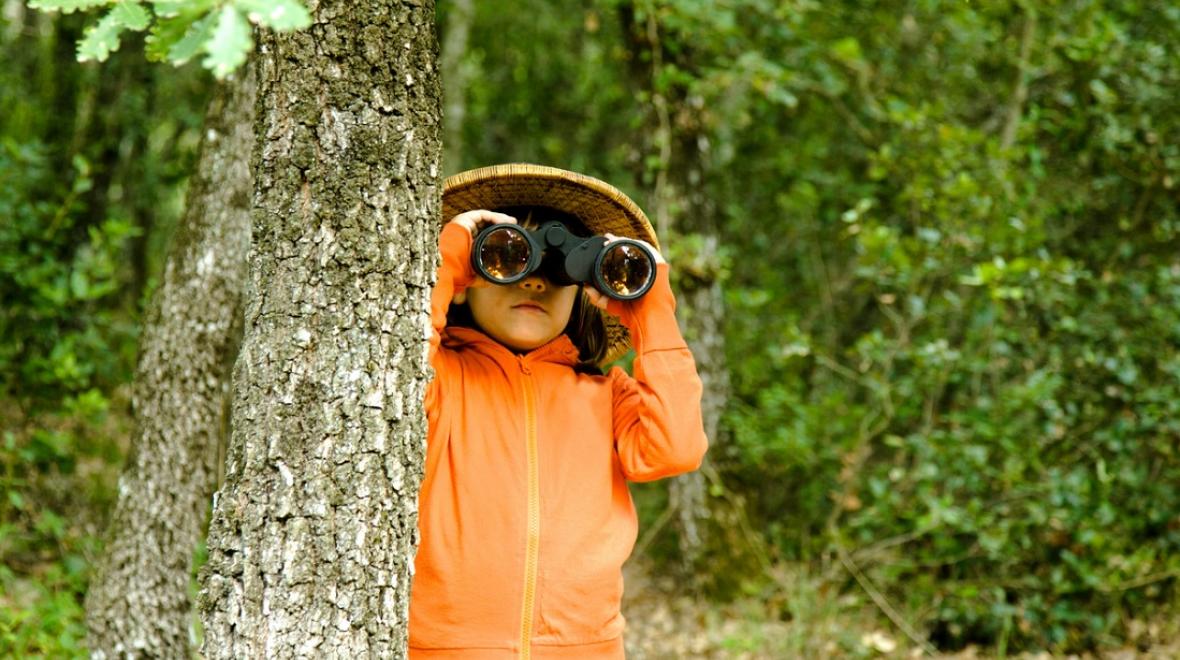
Birdwatching stands out as one of the most accessible and rewarding ways to introduce children to nature. It requires very little equipment, yet offers immediate engagement and a sense of progression as children begin to recognize different species and behaviors.
There are even nation-wide events and citizen science monitoring initiatives that invite birders all over the UK to conduct their own surveys of garden birds, which are absolutely things kids can get into.
For beginners, however, the focus should not be on memorizing bird names but on learning how to notice birds in the first place. As kids get older, they are better able to differentiate species.
If you’re interested in reading more about how to go about selecting an appropriate pair of binoculars for a child, we’ve put together this helpful guide. These are binoculars that are appropriate for younger kids, taking into consideration weight, price and general sophistication.
Keeping a bird journal can also significantly deepen the experience, as can bringing things like field guides (laminated or book-form) into the house. I know I used to spend hours flipping through the pages of Audubon field guides.
When children draw what they see or describe a bird’s behavior in their own words, they are reinforcing their observations and turning a fleeting moment into something more lasting. Over time, they may begin to notice patterns, such as certain birds appearing at specific times of day or returning to the same locations.
Bug Hunting and Mini-Beast Safaris
Exploring the smaller world of insects offers a completely different perspective on nature, one that often feels like uncovering a hidden layer of the environment.
Children are naturally drawn to the idea of searching for creatures beneath logs, stones, and leaves, and this sense of discovery makes bug hunting particularly engaging. One of the recurring phrases of my childhood when my neighborhood friends would knock on each other’s doors was “want to go look for bugs?”

As they explore, children begin to understand that different creatures prefer different conditions.
Damp soil, shaded areas, and decaying wood often host a variety of insects and other invertebrates, introducing the concept of microhabitats. These small ecosystems demonstrate how even the tiniest spaces can support life. Even brick and rockwork can be great places to find local insects.
If you have space in your yard, one of the easiest ways to incorporate insect observation into your time outdoors is to plant a small butterfly garden using local plants.

Looking for insects also provides an opportunity to instill respect for living organisms, especially those that people often, culturally, are scared of or repulsed by. Observing insects carefully without causing harm helps children develop empathy and an appreciation for the role these creatures play in the broader ecosystem.
Plant Identification Basics
Plants form the foundation of most ecosystems, yet they are often overlooked because they lack the movement that makes animals immediately noticeable. Teaching children to identify plants helps shift their attention toward more subtle details in the environment.

Rather than focusing on memorizing names, it is more effective to begin with observation.
Children can compare leaf shapes, notice differences in texture, and observe how plants vary depending on where they grow.
A plant thriving in direct sunlight will often look very different from one growing in a shaded area, and these contrasts help build ecological awareness. I have very fond memories of collecting and pressing leaves with my mother in autumn.
As children become more familiar with these patterns, they begin to recognize recurring features, and even species (“that’s a maple, that’s an oak, that’s a chestnut”) and develop a sense of familiarity with their surroundings.
Building or Buying a Simple Bird Feeder
A bird feeder introduces a practical, hands-on element to outdoor learning while also increasing the likelihood of wildlife visits. If backyard bird observation is your goal, there is no better way than by placing one or more feeders around your yard at the right time of year.
If you’re going to build a feeder, the process of building the feeder itself can be as valuable as the observation that follows, as it encourages problem-solving and creativity.
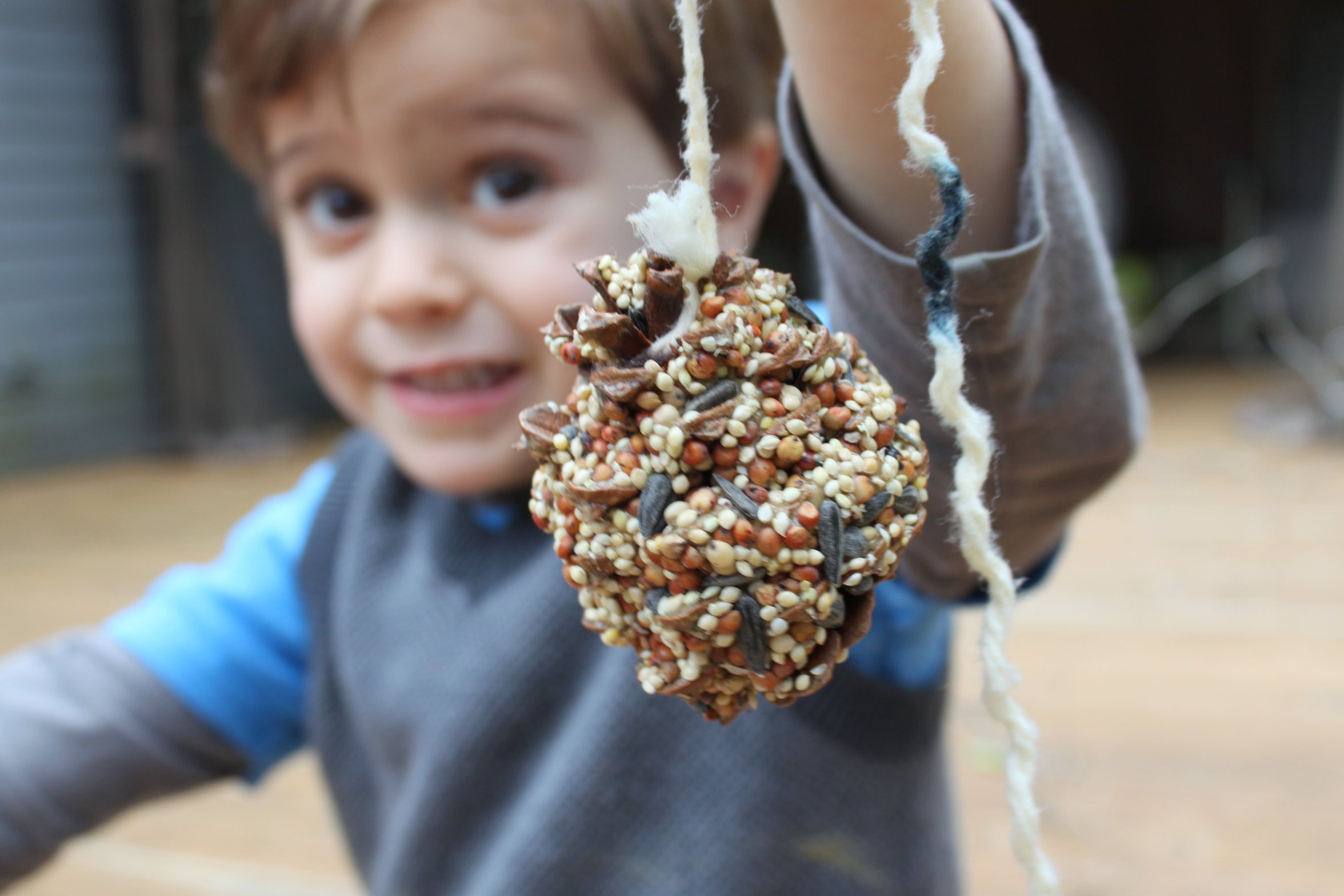
Once the feeder is in place, it becomes a consistent point of interest.
Children can observe which birds are attracted to it, how frequently they visit, and how they interact with one another. Over time, this repeated observation helps children develop a deeper understanding of behavior and routine in the natural world.
We wrote a great article a while back on how to feed UK garden birds the right way, including what kind of feed to use for different species and at different times of year, as well as cleaning requirements and placement tips to make birds feel comfortable and increase your viewing opportunities.
Placing a Wildlife Cam
A wildlife camera adds an element of anticipation and surprise that can be especially exciting for children.
Unlike direct observation, which happens in real time, a camera allows children to discover what occurs when they are not present.

Placing the camera in areas where animals are likely to pass, such as near hedges or feeding spots, increases the chances of capturing interesting footage. You can dramatically increase the odds of capturing passing wildlife by designing your garden for wildlife.
When reviewing the recordings, children often gain insight into behaviors they might never witness otherwise, particularly nocturnal activity.
This transforms outdoor learning into an ongoing investigation, where each new piece of footage adds to a growing understanding of local wildlife. We've put together a comprehensive breakdown of different types of wildlife cameras for different wildlife viewing scenarios.
Taking It Further: Local Parks & Green Spaces
Expanding beyond the backyard introduces greater variety and complexity, which helps maintain interest and deepen learning. Local parks and green spaces provide new environments where children can apply the skills they have already developed.

Nature scavenger hunts are particularly effective in these settings because they provide structure without limiting exploration. By searching for specific items or features, children remain focused while still engaging with the environment in a natural way.
Tree and leaf identification becomes more meaningful in areas with greater diversity. Children can compare different species side by side, noticing variations in bark, leaf shape, and overall structure. This comparative approach strengthens observational skills and reinforces earlier learning.
Listening for bird calls introduces a new dimension by shifting attention away from sight and toward sound. This encourages children to slow down and become more aware of their surroundings, often revealing details they might otherwise overlook.
In coastal areas, beachcombing and tidepool exploration offer a completely different experience. The constantly changing nature of tides creates an environment where each visit feels unique, and children can observe marine life in a hands-on and dynamic way.
Exploring Different Habitats
We’re lucky in the UK to have so many different habitats available to us, and often right on our doorstep. A local forest, wetland, or coastline is usually not far away.

Different habitats provide different learning opportunities, each with its own set of species and ecological relationships. Visiting a variety of environments helps children understand how life adapts to different conditions.
Wetlands are particularly rich in biodiversity, offering the chance to observe birds, amphibians, small mammals, and insects in a setting shaped by water. Anyone who grew up reading (or being read) The Wind in the Willows will have no doubt been delighted by early 20th-century depictions of the Thames riverbank.
Children can see how species interact within this environment and begin to understand the importance of water in supporting life.
Forests, by contrast, offer a layered ecosystem where activity occurs at multiple levels, from the forest floor to the canopy. This introduces the idea that a single environment can contain many interconnected habitats.
Coastal areas, where available, demonstrate how factors such as tides and weather influence both landscape and wildlife.

These environments highlight the adaptability of life and the dynamic nature of ecosystems.
Seasonal Outdoor Learning Ideas
Seasonal change is one of the most powerful teaching tools in nature because it provides a clear and observable progression throughout the year.

In spring, children can observe new growth, nesting behavior, and increased animal activity.
Summer offers longer days and abundant life, making it ideal for extended observation and exploration. Autumn introduces visible transformation, from changing leaves to migrating birds, while winter shifts the focus toward survival strategies, such as feeding patterns and animal tracks.
Experiencing these changes firsthand helps children develop a sense of time and continuity in the natural world.
Tools to Make Outdoor Learning Easier
The right tools can enhance outdoor learning by making observation more accessible and engaging. We previously touched on binoculars that are appropriate for children that allow them to see distant details clearly, particularly when watching birds, without being too heavy or difficult to use.
And, as mentioned, field guides and apps can support identification, but they are most effective when used alongside direct observation rather than as a substitute for it. The RSBP in the UK puts out great field guides to local birds, and there are fantastic guides to garden wildlife, life you find down by the seashore and in tidepools, butterflies of the UK and so much more.
Notebooks and sketching materials play an important role in reinforcing learning. When children record what they see, they are more likely to notice fine details and remember their experiences.
A Tip for Keeping Kids Engaged
In my own experience, I’ve found that the key to keeping children engaged outdoors often comes down to approach rather than activity. Turning exploration into a game can add excitement, while keeping sessions relatively short helps maintain focus and prevents fatigue.
Perhaps most importantly, allowing children to lead their own discoveries creates a sense of ownership. When they feel that they are in control of the experience, they are more likely to remain interested and invested.
Conclusion
Outdoor learning offers a powerful way to help children connect with the natural world while developing essential cognitive, physical, and emotional skills. By starting with simple activities at home and gradually expanding into new environments, you can create a learning journey that feels both natural and deeply rewarding.
More than anything, these experiences foster a lasting appreciation for nature, capable of shaping how children see and interact with the world for years to come.
Leave a comment